
Pellets are a standardized biofuel made from sawdust and planer shavings generated by the wood-processing industry. Through drying and compression, the raw material is transformed into a compact fuel that is easy to store and transport. The consistent fuel properties of pellets provide predictable conditions for combustion and energy production.

Fire-damaged pellets still have energy value
- Article
In October, a fire at SCA’s pellet plant in Härnösand damaged large volumes of pellets. The material is now being repurposed to generate energy, heat, and electricity as sawdust.
Pellets turned back into sawdust
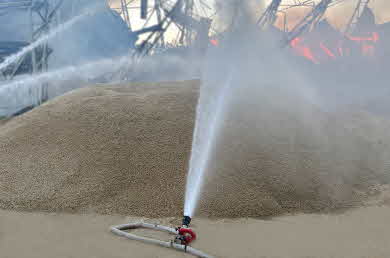
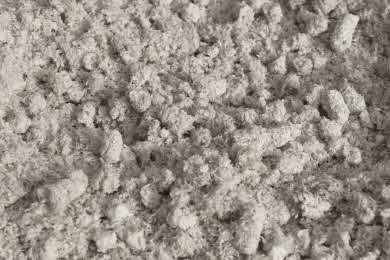
After the fire and the extensive firefighting efforts, much of the pellet stock had broken down into sawdust. Pellets absorb large amounts of water and disintegrate when saturated.
Still a valuable biofuel
Although the wet sawdust has a lower energy content than pellets, it remains a useful biofuel. The material is now being used to generate heat and electricity at several of SCA’s customer heating plants.
Pellet supply remains strong
“It was a significant volume, equivalent to our annual production record. However, it represented just over two weeks of production,” says Johan Stark, Operations Manager, Production at SCA Bionorr.

Pellets being sprayed with water during firefighting efforts.
Water-soaked pellets beginning to break down into sawdust.
Pellets being sprayed with water during firefighting efforts.
Related content

From by-product to efficient biofuel
Pellet production involves much more than simply compressing sawdust. Through drying, refining, and pelletising, raw sawdust is transformed from a moist and bulky by-product into a dry, energy-dense biofuel that is easy to store, transport, and use.
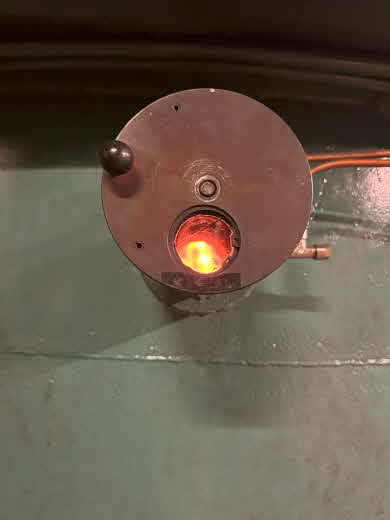
Sawdust becomes energy – fossil-free and efficient
Sawdust, a residual product from SCA’s sawmill, powers BEWI’s steam boiler. A fossil-free and efficient solution that provides both process heat and heating for the facilities. Read more about how BEWI harnesses energy, recycles waste, and produces insulation material made of 98% air.